
Q1: How long does international pump shipping take?
| Origin → Destination | Ocean Freight (port to port) | Total Transit (factory to warehouse) |
|---|---|---|
| China → Southeast Asia | 5-10 days | 15-25 days |
| China → Middle East | 12-20 days | 25-35 days |
| China → Europe | 25-35 days | 35-50 days |
| China → North America (West Coast) | 12-18 days | 25-35 days |
| China → North America (East Coast) | 25-35 days | 35-50 days |
| China → South America | 30-45 days | 45-60 days |
| China → Africa | 20-40 days | 35-55 days |
Total transit time includes: factory production (15-45 days depending on order size) + inland transport to port (2-7 days) + ocean freight + customs clearance (3-10 days) + inland delivery. Plan for the full timeline, not just ocean transit.
Q2: What shipping method should I use for pumps?
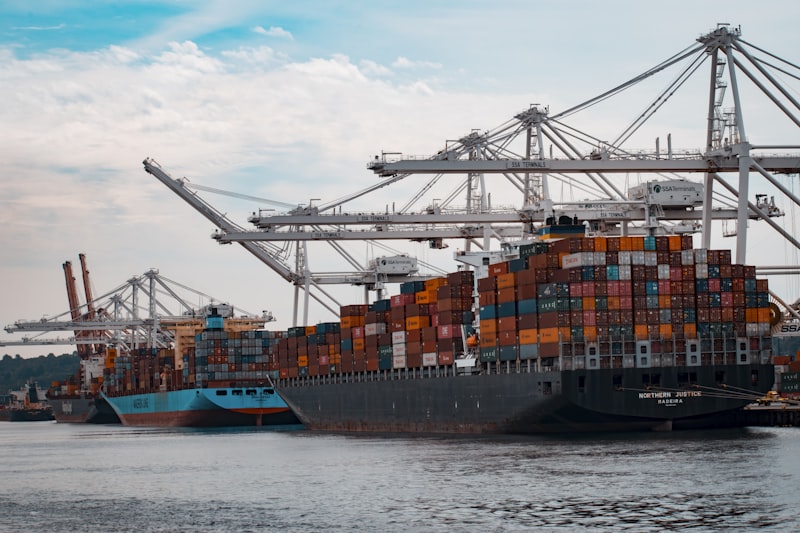
Ocean freight (FCL — Full Container Load) is the most cost-effective for orders of 100+ pumps or 15+ cubic meters. LCL (Less than Container Load) works for smaller orders but costs 3-5x more per cubic meter. Air freight is only economical for urgent small orders or very high-value pumps — cost is 8-15x ocean freight. Rail freight from China to Europe is 30-40% faster than ocean and 50-60% cheaper than air — an increasingly popular middle option.
Q3: What documents do I need for importing pumps?
Essential import documents:
- Commercial Invoice: States the transaction value, seller, buyer, and product description
- Packing List: Details quantity, weight, dimensions, and contents of each package
- Bill of Lading (B/L) or Air Waybill: Contract of carriage and proof of ownership
- Certificate of Origin: Required for preferential duty rates under free trade agreements
- CE Certificate / Declaration of Conformity: Required for EU imports
- Test Reports: Performance test and hydrostatic test certificates may be required by some customs authorities
- Import License/Permit: Required by some countries for electrical or mechanical equipment
Q4: How are pumps packed for international shipping?
Standard export packaging for water pumps:
- Individual pump: Plastic bag (moisture barrier) + foam cushioning + corrugated carton or plywood case
- Pump sets (motor + pump + control): Individual packing + consolidated into export-grade plywood crates
- Large industrial pumps: Mounted on wooden skids, protected with VCI (vapor corrosion inhibitor) film, and enclosed in plywood crates with ISPM-15 heat treatment marking (required for international wood packaging)
- Container loading: Pallets or crates are secured with straps and dunnage to prevent movement during transit
Q5: Do I need marine cargo insurance?
Yes, always. Marine cargo insurance costs approximately 0.2-0.5% of the cargo value and covers physical loss or damage during transit. Without insurance, if a container falls overboard or a crate is crushed during handling, you bear the full loss. Types of coverage:
- Institute Cargo Clauses (ICC) A: All-risk coverage — most comprehensive
- ICC B: Named perils — covers major accidents but fewer causes
- ICC C: Minimum coverage — fire, stranding, collision only
Always insure for CIF value + 10% to cover ancillary costs. Never under-declare value to save on premium — in case of loss, the settlement will be based on declared value.
Q6: What are Incoterms and which should I choose?
Incoterms define who pays for what and where risk transfers from seller to buyer:
- FOB (Free On Board): Seller delivers to port and loads onto vessel. Risk transfers when goods are on board. You arrange and pay for ocean freight and insurance. Recommended for experienced importers.
- CIF (Cost, Insurance, Freight): Seller arranges and pays for shipping and minimum insurance to destination port. Risk transfers when goods are on board at origin. Simpler for first-time importers.
- EXW (Ex Works): You collect from factory and handle everything. Maximum control, maximum complexity.
- DAP (Delivered at Place): Seller delivers to your specified location. Simplest for buyer, highest cost.
Q7: How are customs duties calculated on water pumps?
Customs duties are calculated as: Duty = CIF Value x Duty Rate (%)
The CIF value includes the cost of goods, insurance, and freight. Duty rates vary by country and HS code classification. Water pumps generally fall under HS Chapter 8413, with rates typically ranging from 0% (free trade zones) to 10%+. Some countries also apply VAT/GST (5-27%) on the CIF + duty value. Always verify the applicable HS code and duty rate with your customs broker before shipping.
Q8: What happens if my shipment arrives damaged?
- Document immediately: Photograph the damage before unloading. Note damage on the delivery receipt.
- Do not accept obviously destroyed cargo: You have the right to refuse obviously damaged shipments.
- File a claim: Contact your insurance provider within the time limit (typically 7-30 days from delivery).
- Preserve evidence: Keep damaged items and packaging for insurance inspection.
- Contact the supplier: They may assist with the claim or offer replacement terms.
Q9: Can I track my pump shipment?
Yes. Your freight forwarder or shipping line provides a container number, B/L number, or booking number. Use these to track on the shipping line's website or through a tracking service like MarineTraffic or VesselFinder. Most shipping lines now offer GPS-enabled container tracking for an additional fee.
Q10: How can I reduce pump shipping costs?
- Maximize container utilization: A 40ft container costs only 30-40% more than a 20ft but holds 2.3x the volume
- Plan ahead: Book 4-6 weeks in advance for better rates; spot market rates are always higher
- Consolidate shipments: Combine orders from multiple suppliers in one container through a consolidation service
- Negotiate annual contracts: If you ship regularly, annual rate agreements save 15-25% vs spot rates
- Optimize packaging: Reduce volume where possible; even 10% volume reduction saves 10% on freight
Need shipping guidance? NOVAPUMP's export team handles all international logistics. We provide FOB, CIF, and DAP terms with full documentation support. Contact us for a shipping quote for your destination.